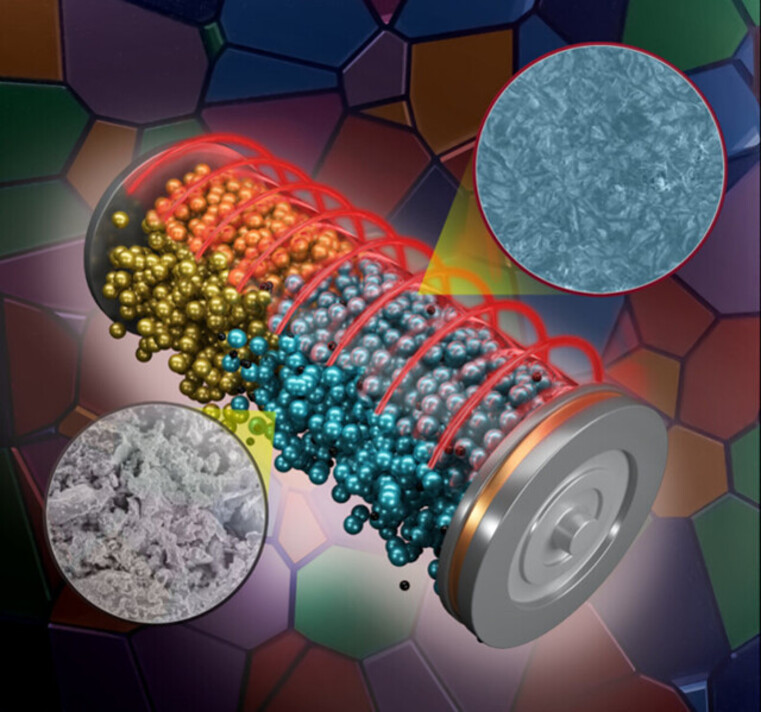
What is a solid-state battery?
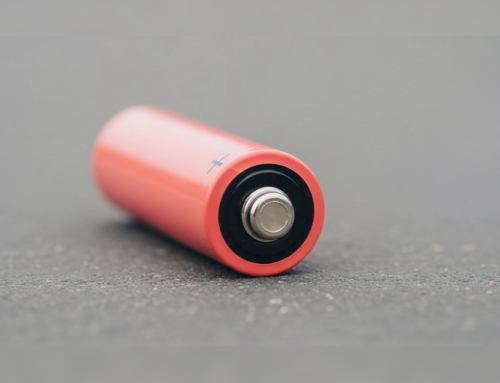
A battery is a device that stores electrical energy in the form of chemical energy and converts that chemical energy to electrical energy when required. In batteries, this phenomenon happens because of a material that is known as “Electrolyte”. In conventional batteries, this electrolyte is made of liquid or gel-type materials. But in a solid-state battery, the electrolyte is completely different. Here it is in solid form. Due to its unique feature, it changes many things in the battery and makes it more reliable and flexible. How did it happen? Let’s find out.
Beginning of the solid state battery:
The history begins in 1830, when we known scientist Michael Faraday investigated the concept of solid electrolytes. His investigation showed that some solid materials are able to carry electric charge via ionic mobility. It was a breakthrough concept that laid the foundation of solid-state ions. After that, in 1990, Scientists of Oak ridge national laboratory in USA invented Lithium Phosphorous Oxynitride. It was one of the first solid electrolytes that could be utilized at ambient temperature in thin-film lithium batteries. These batteries had low power capacity, but they were reliable, safe, and long-lasting and were used in medical implants such as pacemakers, RFID tags, and other low-power electronics.
A significant milestone was achieved in 2011, with the discovery of lithium germanium phosphorus sulfide (LGPS). It is a sulfide-based solid-state electrolyte that has conductivity comparable to liquid electrolytes even at ambient temperatures. This discovery builds a path between safety and performance. Materials like LGPS paved the way for practical applications of solid-state batteries.
Inside engineering of solid state battery
Inside mechanism of solid state battery:
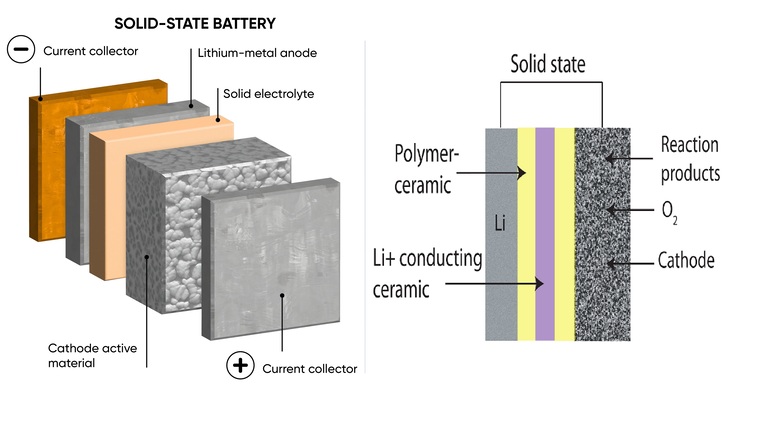
In a solid-state battery, chemical energy is converted into electrical energy by using a solid electrolyte to move lithium ions from one electrode to the other. Here, solid electrolytes are composite compounds that have high ionic conductivity. These batteries differ from conventional lithium-ion batteries, which are the most common type of rechargeable batteries those are using liquid or gel electrolyte materials.
When you compare the internal structure of a solid-state and a lithium-ion battery, you will find that both of them are composed of a cathode (a positive pole that is made of cathodic material such as Lithium iron phosphate) and an anode (a negative pole that is made of anodic material lie carbon). These two poles are separated by an electrolyte. Here, the electrolyte is a medium through which ions move inside the battery.
In the charging process of the battery, electrons move from the cathode to the anode, which increases the chemical potential energy of the battery. This is the charging process of the battery. Whereas in the opposite process, when electrons move from the anode to the cathode, the chemical energy is converted into electrical energy and generates electricity; this is the discharging of the battery. During the charging and discharging cycle, the oppositely charged ions move through the electrolyte inside the battery to balance the charge of the electrons, which makes the battery rechargeable.
Merits of solid state battery:
High Energy Density: This is a primary advantage of solid-state batteries. Their energy density is very high, which means it can store more energy relative to its size or weight. By using a solid electrolyte, they can utilize high-capability anode material, which is not doable in the case of liquid electrolytes. This means that you could get more power from the same size, or a much smaller and lighter battery.
Safety: In energy storage systems, safety is the most concerning area. In liquid electrolyte batteries, thermal runaway may generate fire if the battery is damaged or overheated. For this reason, the operational area of these batteries is limited. Meanwhile, a solid-state battery uses non-flammable solid electrolytes that eliminate this risk. This feature makes these batteries more stable and less prone to puncture, short circuits, and extreme temperatures.
More Lifespan: Battery life basically depends on its charging-discharging cycle. In liquid electrolytes based battery chemical reactions within the electrolyte can cause degradation over time, which is reducing the battery’s capacity. On the other hand, solid-state electrolytes are more robust and can better withstand charge-discharge stresses.
Practical application area of solid state battery:
Home Energy Storage: The high energy density of these batteries benefits homeowners by storing more energy in a low weight and small size. A lightweight system is also easy to carry and install in the home.
Powerful off grid solution-: Those who are living in off grid areas such as mountains or remote desert or under sea (such as marine) solid state batteries offer several advantage to them. Its higher density provides more power for longer periods and reduces reliance on power backup generators.
This technology is still evolving.
Thanks for reading. See you soon with another exploration!